Showing posts with label Rating: 8/10. Show all posts

Tuesday, March 5, 2019

Ánimas (2018)

Family, friends, and loved ones

By: JWBM

This Spanish made film is a deep-rooted, psychological look at a connected group of relationships, but unlike any other you may have seen before. In a creative twist, it deals with moving on from negative aspects of family, moving away from old friends holding you back, and moving closer to new ones that may bring on a shimmering hope of light to all of the enshrouding darkness. One can only dream.

This maintains an overall downbeat vibe with a mix of symbolism and hidden meaning: such as material objects and sense of time playing tricks. The film is strange and allusive; with interactions and dialogue that are as slippery as tap shoes on ice. Though it's also well-crafted in that it moves with a sense of grace and allure. It's part drama, mystery, and thriller, with the intention to alternate tones in order to peel back the bruised layers and get to a more ripe resolution. It's more show than tell, delivering a share of slow burn atmosphere that causes your thoughts to mainly linger around a particular evolving apartment complex that takes on a life of its own. One can hide or seek help.

"Ánimas" maintains a great balance between being artful, emotional, and stirring all at once. While this has some thrilling moments to rile the senses, this is far from action oriented in order to become intimate with the characters and settings; it flows more dream-like, bordering on nightmarish at times than anything else. The main star, Alex—played by Clare Durant—delivers a dynamic performance: from self-loathing, to caring of others, and then looking for a sense of need and purpose related to her family and best friend Abraham. Ultimately, the obscured though measured messages in the film tend to stay with you. Such as showing us the careful balance of being alone and in our own head growing up; pessimism is a rain cloud that will eventually blow away, but, even with help, it's up to us to take charge and make that change. One can do more than just dream.

Rating: 8.5/10

Director: Laura Alvea, Jose F. Ortuno
Actors: Clare Durant, Ivan Pellicer
Info: IMDB link
Trailer: YouTube link

Saturday, February 16, 2019

St. Agatha (2018)

Vows of pain

By: JWBM

Careless mistakes and poor decisions in life come with repercussions: from setbacks, guilt, to even punishment. A young woman named Mary—not of divine namesake—managed to stack up a few, which leads her to seek help with a group of nuns at a catholic boarding house from little elsewhere to turn. The dwelling is remote: not a good sign. There are impossible rules to follow: another nope. Then there's the punishments: something that makes a slap on the knuckles with a ruler look like child's play. The idea should have been golden, since all is forgiven in the Lord's eyes. Clean slate... fresh start... not a chance.

The film has a generous mix of themes interconnected within its story. It takes your typical preying on helpless women horror movie trope and blends that with cultural morals of the '50s, not to mention a cult angle using nuns that are more sinful than a whole congregation of normal church goers combined. It's more evolved than the random person walking home alone on a dark night kind of movie by turning the victim/villain angle into a unique story of its own. It's out there and let's just say it wouldn't happen to you or someone you know, however the individual atrocities and tortuous setups put you in the moment and force you to take it all in whether you'd like to or not. It's the kind of horror where if you were looking for a relaxing night in front of the TV, the director instead yanks you by the shirt and reels you in to feel what they feel.

Its idea of elaborate and sadistic torture becomes a new level of pain, stress, and terror. Yet, it doesn't come all at once, but slowly traps the lead character Mary in a simmering pot where the heat grows stronger and the walls grow taller by the minute. Things go from mildly edgy, uncomfortable, to outright unsettling with a creative twist or two, while all you can do is sign the cross and hope that there's some shred of a miracle in the chaos and darkness.

"St. Agatha" is a highly atmospheric, terrifying, and inventive experience that not only has a share of layers, but manages to do them well enough to come away with a head full of scarring questions related to the dark and insane. The film has a certain trippy vibe going on with exaggerated blues and reds. There are splices of dream-like imagery of Mary's past troubles and present confusion that give it another angle of mood. It's a tale where good isn't anywhere to be found, but it still manages to create a back and forth of constant tension between its "hero" to its masterclass villainess by the name of "Mother." The acting feels practiced and genuine. Sabrina Kern—as Mary—delivers the performance of an intelligent, agonized animal with a stubborn will to survive. Carolyn Hennesy—as the main villain—comes with a duality of sly charm, to then fleshing out the moral-less unchecked power of a cult leader in holy get-up.

This is a film that has the intention to rile you up. It pokes you with a stick, though it has the patience to see how you'll react. It's more emotionally driven than it is sophisticated: the idea is to tap into all of your senses rather than just easily using loud sounds and over-the-top imagery. Most people would become comatose or hide in a corner. Now, imagine you're someone with no where to go or to turn to. What's your next move?

Rating: 8.5/10

Director: Darren Lynn Bousman  (Saw II, Mother's Day, The Barrens)
Actors: Sabrina Kern, Carolyn Hennesy
Info: IMDB link
Trailer: YouTube link

Sunday, January 20, 2019

Tau (2018)

Evolution of the circle

By: JWBM

What is life? No one would question a man or animal that walks and breathes as living. What are emotions? Put a man or animal into a stressful situation outside of routine and no one would question their actions or individual motivations as not being emotional. The bigger question is: Can man create life and emotions, or even individual thought patterns, apart from his DNA?

The story has an interesting sense of evolution to it. Where it starts out like your everyday horror feature with a lone, pretty blonde being kidnapped and experimented on by some rich, hyper-intelligent tycoon, it mutates into something more thought provoking along the lines of science fiction and technological morality. The main villain is an inventor who specializes in lifeforms—he also has success, investors, wealth, and security at his finger tips—though he's obsessive, which makes him alone, and with an ironic sense of being a two-dimensional force lacking in proper human interaction and normal emotional responses. We get to see his test subjects grow and excel beyond their initial capabilities from the caged predicament they are put into—because life flourishes; emotions can't always be held back or controlled.


The lead, Julia—played by Maika Monroe of "It Follows"—is fierce, smart, and adaptive. What separates her from her captor is she recognizes needs and injects careful feeling into processing a situation where true interaction stems. There are intriguing questions of why life protects life from a mutual friendship or benefit, to moral questions of life ending life from severing a relationship or usefulness. Things can't be governed by solely logical actions, as they can't be pure emotions either. Existence isn't perfection, neither is it always nailed down by a single definition in the page of a book.

The film takes place in a single environment, though it used the confined spaces to outline everyday aspects the normal person caught in a routine wouldn't sit down and ponder on. This isn't going to be a lecture by any means; it still has a sense of entertainment with suspense, and a connection to the characters: one human test subject, and one computer test subject who make an unlikely bond that's memorable enough to last after the credits roll.

Rating: 8/10

Director: Federico D'Alessandro
Actors: Maika Monroe, Ed Skrein, Gary Oldman
Info: IMDB link
Trailer: Youtube link

Wednesday, January 9, 2019

Upgrade (2018)

HAL 9000 just got darker

By: JWBM

What is misery? Some might say that it is an intense, nearly hopeless state that pushes human bounds beyond just sadness. Another might give a more close to home definition of being involved in an accident where you become cripple and also senselessly lose your wife to a gang of thugs. You spent your whole life trusting your hands and working with mechanical parts. Now, you must embrace a futuristic world that is becoming more and more dependent on computers and solid state technology. Though, the bigger question is, is some added convenience worth the unforeseen complexities that go along with advancement? Not just minor attributes when dealing with computer intelligence, such as human laziness, or expense, but a moral dilemma when it does our dirty work?

What is a miracle? Some might say that it is an event or action inexplicably resolved by some higher power. Another might say that a miracle doesn't exist. In this case, they may be right. Grey Trace went from not being able to move anything but his his head, eyes, and lips, to being given the chance to become part of an experimental procedure that gives him not only full function back to his limbs, but also new and potentially deadly abilities. In light of his recent incident involving a gang of outlaws, one might question anything positive coming from it. Seeing both circumstances come together, you can just smell a forecast of revenge and blood in the air.

"Upgrade" guides you by the hand, replaces it with a cybernetic one, and then uses it to manipulate and destroy people in highly creative fashion. Once released from its cage, the film is nearly a constant, adrenaline-packed rush. It's an incredibly fun experience that mixes a blend of its own brand of science fiction where humans go dark with upgrades, and good ol' fashioned action scenes to make the blood pump and the circuits re-connect your senses. Being directed by an original actor and writer of the "Saw" series—Leigh Whannell—this is on par with the violence of a horror movie. Not quite as over-the-top as "Tokyo Gore Police," though it's guaranteed to make the regular cinema goer flinch. The uncut version of "Robocop" might have a new rival in town, where knives carve deeper and uglier than a rush job on a Halloween pumpkin, and heads explode like a well-developed kid going to town on a pinata that represents everything wrong with his childhood.

In order to keep the narrative steadily going, some aspects are convenient, such as an advanced world where the cops are never there at the right time, with criminals and technology instead running rampant. They created some inventive aspects of the future, but didn't overstep themselves and make it over-complicated either. It feels like a kinetic, flowing film from start to finish. It's a basic revenge story, mixed with swirling, more complex questions of where technology could be headed. Super soldiers and electronic implants might be beyond belief, though this dark and visceral experience never lets you think otherwise.

Rating: 8.5/10

Director: Leigh Whannell
Actors: Logan Marshall-Green, Melanie Vallejo, Betty Gabriel
Info: IMDB link
Trailer: Youtube trailer

Sunday, December 30, 2018

Nacho Cerdà's shorts III: Genesis (1998)

Life is uncertain

By: JWBM

We often find ourselves in routines, taking for granted the love ones around us: conversing, joining in dinner, and sharing a bed are basic guarantees in our minds. If an accident were to happen, many of us would be unprepared and might end up traveling down a spiral of despair and uncertainty from all the memories and joined moments. If there was a glimmer of hope after the fact, I feel some would go through with it no matter what the consequences would be. Those truly in love often strive for each other's happiness after all.

Apart from dealing with death, the subject matter of Nacho Cerdà's "Genesis" is far removed from his two earlier works "The Awakening" and "Aftermath." The only exception to that is how this film is paced and shot compared to "Aftermath." "Genesis"—sharing the same rich-in-the-eyebrows lead, Pep Tosar—is likewise methodically driven to squeeze every bit of ambiance out of the room. Apart from some nightmarish flashbacks, this feels more a drama and fantasy than it does an outright horror or thriller: deep rooted emotions and some fantastical ideas are at its core rather than shocks or surprises. Instead of having dialogue or a voice over, it's fueled by a haunting classical score, eerie sound effects, and hovering wide-angle camera angles. These seem to slowly chip away and shed light on the inner happenings of a sculptor who lost his wife and now finds a way to bring her back while at the same time slipping away himself.


This was a well put together 30 minute short. It comes with its own unique mood with the artists's studio presenting an escape to a place of sadness and solitude. It creates a certain level of relatability for anyone who's felt powerless after a sudden loss. While not the perfect fantasyland outcome one would ultimately want, it instead delves into what love and sacrifice actually mean and how some of us interpret them when presented with the impossible. The film relies more on how you feel towards it rather than writing in between the lines of every action or motivation for you. With some more length to it, I feel it could have expanded even further on its themes and could have possibly been even more of an emotional force.

Rating: 8/10

Director: Nacho Cerdà (The Awakening, Aftermath)
Actors: Pep Tosar, Trae Houlihan
Info: IMDB link

Saturday, December 29, 2018

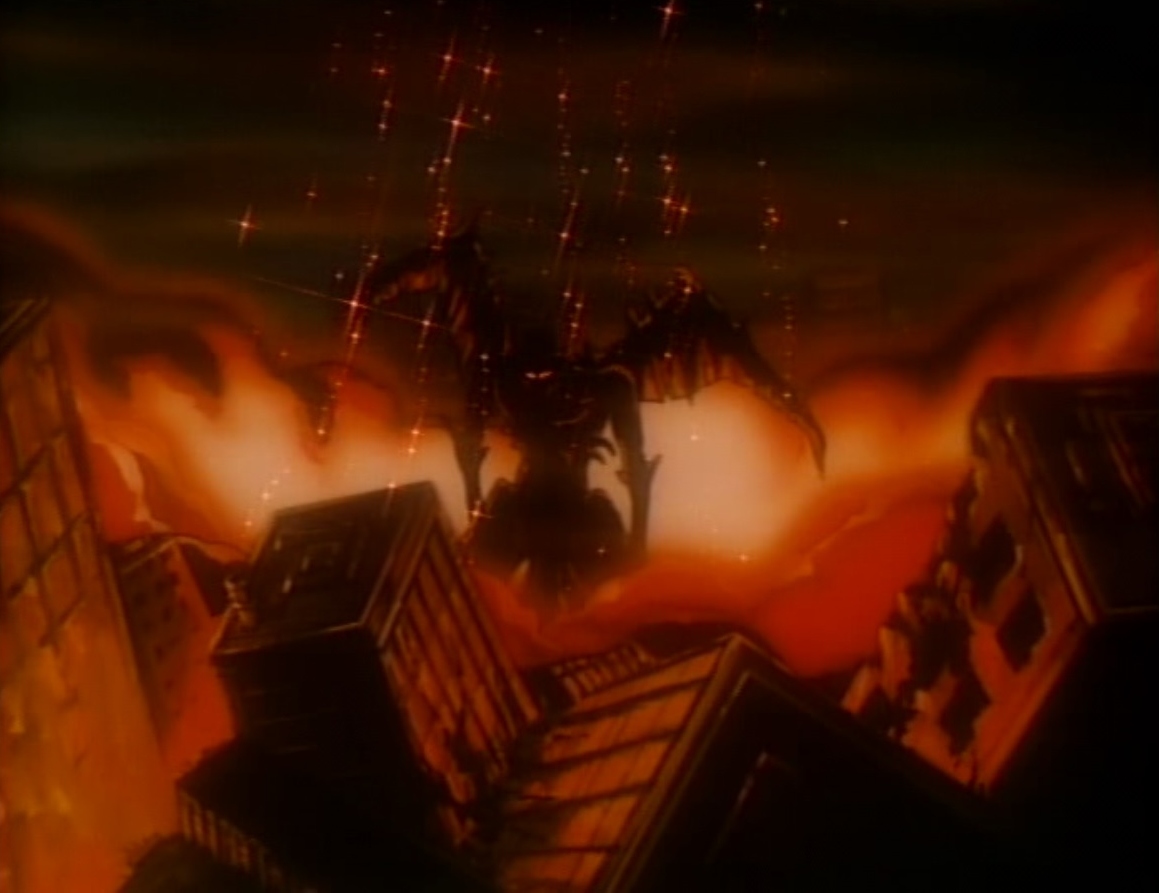
Urotsukidoji: Legend of the Overfiend (1989)

If sacred ground had an opposite

By: JWBM

The uncut version of this is one of the most over-the-top animes I've laid eyes on. It's one of those films that you have to double check not only who's in the room, but who will potentially come home and accidentally walk in on some of the scenes shamelessly displayed. Not only is it incredibly dark and violent, it's also perverted to another level beyond innocent fantasies: being at the far back of the mind of even the most demented person's imagination. Films such as "Violence Jack," and "Wicked City," set this up to knock it out of the park and run the bases two times over just because. One doesn't know whether to stick around, keep one eye open, or run for cover.

A large focus of this tale is of a foretold legend and what's to come from it for the three species of worlds: will better times be ahead, or will darker times swallow up any shred of light? Maybe a mix of both. There's a pull and tug between demons and humans, with the half-breeds to bring together a balance of sorts. Demons bring senseless destruction and chaos: from murder, and rape, to any other form of the heinous acts that go along with it. As far as they are concerned, things are just fine and dandy just the way they are. The more reserved half-breeds—while perverted, and just as capable of danger—are hanging on to a dream that the legendary Chojin will end up stopping the madness.

This is part fantasy, action, erotic, post-apocalyptic, coming of age, and also part horror. The tone shifts are sometimes at complete opposite ends of the spectrum: going from utter carnage and perversion, to light and fluffy teenager stuff. You'll witness scenes that will potentially leave scars for how utterly far they're taken, to then in the next breath have a kind of innocent high school love angle with sparks in the air. But, then again, that's what makes this work: if everything were painted black and red, the contrast would become monotonous despite its rugged edge. Needless to say, this is not for someone with a strict moral code. Take the scene with the nurse, turned demon, turned penis-arms taking every bit of advantage of a poor, innocent student behind closed doors. You'll never look at a nurse's office or even a predatory octopus the same again.

While the experience is one bounds-pushing sensation after the next, the underlying direction is not as linear as one would hope for. In some ways, it's a great collection of some memorably creative, perverse, and horrific ideas stirred up and let loose into the air. Some of the story—as simple as it is—does get a tad muddled at points with everything going on.  Also, a few of the character representations and voice-overs are somewhat awkward and silly, such as the two henchmen from the Makai world. Or the somewhat misplaced, cute, and perverted looking monkey thing that follows around Megumi: a half human, half demon with no sense of how a lady wears a skirt. Though, the first time I saw this, I walked away wide-eyed and with a few more check marks shy from my imaginary list of things I can say I've seen in the world. That seems to be the ultimate point here: to serve up a movie watching experience like no other you can escape into. "Urotsukidoji: Legend of the Overfiend" is what you get.

Rating: 8.5/10

Director: Hideki Takayama (Captain Future, Gu-Gu Ganmo)
Info: IMDB link
Trailer: Youtube link

Thursday, December 27, 2018

Fist of the North Star (1986)

Hope is not on the horizon

By: JWBM

As the dominant species with intelligence on earth, we often contemplate altering our genetic make-up to transform ourselves into more than our destined path would have been: whether that be holding on to our youth, filling our brain with more knowledge, or making every attempt to further our physical abilities. Now take the world going into a post-apocalyptic age, where those with excessive physical strength and ability become a chiseled symbol of supremacy. Men with immeasurable muscles and the demeanor of true scumbags, are now treated with genuine fear and almost like false gods.

We fight for food and water, we fight for mating rights, we fight for territory, and, at other times, we fight to see who's the best. With a little bit of all of the above, "Fist of the North Star" opens up to a testosterone laden world of sheer savagery with little end, and puts the weight of it on the shoulders of one man: Kenshiro. He's got a tragic past and scars to prove it, he looks like Bruce Lee had a kid with Mad Max, and, ultimately, he's got a certain genuine inner character balanced with an outer strength that might just be the key to saving humanity from the dark and nearly hopeless path it's headed down. 

What's interesting about this story is it's not saturated with drama of what we've become as humans, it mainly hovers around the primal portion of ourselves on either side: whether we've gone full dark and embrace chaos and destruction, or, in a more rare case, embrace trained violence for the sake of righting wrongs in a lawless world. It's essentially the necessary answer to most problems here; it's also unintentionally comical for how doors are opened, or any bit of property is treated, because at this point who cares. Psychologically, it resonates in the same morbid curiosity of not being able to look away from seeing two thugs duke it out on the streets from afar, to a bigger bully being taken out by a hero of sorts that steps in. I feel that connects with our deep-rooted instincts in that we don't want to admit it's there in this day and age of technological advancement and emotional suppression. Take for example, when was the last time you said hello to your neighbor, versus when was the last time you wanted to say something angrily to your neighbor? This uses the bleak and barren backdrop to take several steps back to where it all began.

The animation was fresh, creative, and original for its time. It makes the scenes pop, and the interactions feel that much more powerful. Some detailed painted backdrops are used to show the lifeless and soul-crushed state of the earth: buildings are a vague reminder, along with any shred of green or blue. Other scenes offer up wide-eyed surprises when it comes to the fight choreography and certain character's abilities. One of the coolest characters here is Rei, who has an ability to slice his opponents into a series of pieces in these atmospheric slow motion cut-away shots. An interesting note is the change in picture quality for the extremely gory scenes; apparently the original version was lost and then later spliced together.

This is a simple tale that works due to having an epic feel to it. Being a condensed version of a multi-part manga, there are portions missing in between that would connect the dots better, though it still maintains an emotional connection to the roles, along with manages to steer from being just a black and white approach to good and evil. This takes your typical fantasy story of fate and what's written in stone, and then inverts it from the unexpected and what was "supposed to happen." You'll want to either root for the anti-heroes, or possibly even transform into them yourself to serve up some crude justice.

Rating: 8.5/10

Director: Toyoo Ashida (Vampire Hunter D)
Info: IMDB link
Trailer: Youtube link

Sunday, December 2, 2018

Candyman (1992)

Hook and honey: pain and pleasure coalesce

By: JWBM

This film was a dark and intense force when it was released in the early '90s. There are certainly dated attributes of the time going on here, though what separates it from your typical horror of a few years earlier in the '80s, is it's not doing them on purpose, or putting them in your face either. It's not a fun movie, or one you walk away with an invigorating feeling like others that were pure surface entertainment. Like some of Clive Barker's other stories turned films—such as the primal and evil-drenched "Hellraiser"—it's at the complete end of the spectrum of being sinister, violent, sadistic, and engrossing for all the wrong reasons of what we should be watching at the cinema. It's guaranteed you're going to see something that's going to challenge your senses for better or worse—that's for sure.


This is a simple tale of an urban legend. A go-for-glory graduate student: Helen—attempting to make a splash with her thesis—picks a local Chicago tale to stir up the past with a man with hook for a hand and a fondness for bees and murder. She finds herself in a housing project called Cabrini-Green that's outwardly stricken by neglect and inwardly full of graffiti, drugs, and broken dreams. Soon she gets more than she bargained for when she looks to be the prime suspect when a few people's insides end up as a crimson interior paint job gone wrong. Is it her blind and obsessive ambition to get her work to the masses, or the work of some other supernatural horror? The story is both tight and loose in that it can be calculated, and then in the next breath blurry and just out of grasp. In one instance, you'll feel the moment by moment, and then in the next feel a jarring disconnect to this nightmare of an experience. I feel this works for how ambiguous the plot is regarding this establishment that either uses an urban legend as a reasoning for their troubles and woes, or it's the real deal and it's as terrifying as it seems in both regards.

The setting in Chicago is as much a character as anyone else in the story. There are frequent aerial shots to show the bustling traffic and momentum, accompanied with Phillip Glass' organ, choir, and piano-centric score to give an ominous and haunting reminder as to what's to come. It's unlike any other horror music that's out there: both harmonious and hypnotic; minimalistic yet personable; it's everything this film needed to create this heavy-handed ambiance that you can't shake even after the credits. The film has this strange dreamlike atmosphere throughout: a surreal feeling where the air is lighter, shadows and sounds extend past their usual scientific scope, and the dreary possibilities are endless; like looking into a mirror of a mirror of a mirror that's each showing further happenings and events that are interconnected and just as weird and threatening as the next.

This has a heavy, oppressive tone, though it's also mixed with some every day realism. The difference between this and other urban legends is it acts more out in the open compared to your typical mysterious ghost-like figure in the shadows. It's capable of creating an apprehensive presence with one of the characters alone to the dark like any good horror tale, but also be equally unsettling with people around in broad light. It slowly creeps, no doubt, but it also pops out in a glorious feat of blood and gore to show you it's alive and ready for distasteful action. It's the contrast of being in an everyday setting such as a waiting room, or walking to a store, then suddenly finding yourself swimming against the current of a blood filled tidal wave that came crashing down in a place you once found comfortable and non-eventful. What you won't find here is compromise for any of your typical safety barriers.

Tony Todd—as the Candyman himself—pulls off one of the most memorable villains of the '90s with a display that breathes all that is dark and supernatural. His character has a graceful way of dishing out some of the worst pain and torment imaginable, while also being this strangely gravitating force sent from the deep realms of a bleak abyss that you can't wait till he emerges again. His voice has an unmistakable cadence to it that seems to surround you from all sides and pull you in like a predator that enjoys the hunt with a pleasurable chuckle and a smooth grin.

What's great about this film is when it goes for something you can count on it to have a slow build to get under your skin, then suddenly take it even further to make one jump out of their skin and flee with vulnerable terror. There's no higher meaning or purpose here, except cool and intriguing ideas refined to an expert degree. And, well, of course, to scare the living crap out of you. It has an unshakable, foreboding atmosphere that lingers with you after. You know it's not real, but the filmmakers made you think otherwise. That's real magic right there.

Rating: 8.5/10

Director: Bernard Rose (Paperhouse, Chicago Joe and the Showgirl)
Actors: Tony Todd, Virginia Madsen, Xander Berkeley
Info: IMDB link
Trailer: Youtube link

Tuesday, September 25, 2018

Curse of the Undead Yoma (1989)

To transcend oneself; to trample on others

By: JWBM

This is a story that deals with the ultimate line-up of cool: monsters, magic, and rival ninja clans. Though at the center of its dark heart is a story of friendship since childhood that has been strained by the complexities of external forces—that's putting it lightly—not to mention growing up into a war ravished time no longer innocent. It's as emotional a tale as it is blunt: you'll be treated equally by tragedy and sorrow, as well as violence and savagery in the next breath.

The tone comes across as an action/horror with an otherworldly vibe. As if you picked a more traditional time in Japan, and included overtly gloomy backdrops and mysterious beings into the mix to shake it up and make you more and more uneasy as time presses on. If you were expecting just plain old '80s ninjas doing routine ninja things on any other ninja-centric afternoon—think again.

Hikage—who's part of the Takeda clan—is sent to stop a friend and fellow ninja, Marou, from spreading word of their leader's recent death in order for the clan to save face. Even after circumstances change, Hikage still persists in his search of Marou: the man with take-over-the-world ambition that resonates through his long, life-of-their-own locks. This is broken into two parts, where the first half just sinks its claws in, and the second—set some years later—only goes deeper into the darkness with a land full of death and destruction. If you're lucky, some stay dead. If you're unlucky, they return as yoma: or undead monsters of various shapes and forms. Ginormous man-spiders are common-place and just as horrifying as they sound.

For its day, the animation comes with a share of dynamic. Such as some wide angle shots that paint the surroundings with eerie backdrops and foreboding shadows that drip with menace. There are also tight and flashy shots to increase the adrenaline of what hairy or perilous situation Hikage finds himself in next. It seems that anyone he runs into is a victim of some evil underboss that wrecks havoc on whatever village or area it gets its demonic hands on. The illustrations can be personable and help solidify what Hikage is torn up over, but is too afraid to show: giving off doses of symbolism and shreds of humanity that sheds light on the tattered ruins these towns have become.

"Curse of the Undead Yoma" is an atmospheric anime that finds itself smack dab between the senselessly violent kind, and at another point where there's some shred of meaning included to give it another angle and some emotional impact. It deals with choice, societal constraints, acceptance, power, and even suicide from lives thought lost. The first time I saw this—picked up as a random buy on VHS—admittedly I had little idea of what was going on, but was enthralled by the encapsulating tone, visuals, and morbid curiosity of it all. It does that well. They had me at, "All of my life is an illusion," as a guy's throat sprays out red in that iconic delayed effect seen in any good Japanese sword play feature.

The major pitfall of this is—that if you've seen it enough times—it has moments of being rough around the edges. It's not always consistently linear with its story or with character introductions—especially the second half—leading the viewer to coincidentally stumble into this, fall into that, be confused over here. In one instance, some powers build up to the sky, so to speak, and then—once all of the over-the-top animation is done—are taken down by basic means. I mean, to be fair, it has tendency to be more poetic and artful than it is trying to be thoroughly accurate or challenging. Plus, ninjas always have a card up their sleeve, right? It's using the medium to explore other avenues live action isn't capable of. For that, it is eye-opening and memorable, not to mention thoroughly entertaining for being capable of keeping your eyes glued to the screen as an overall experience.

Rating: 8/10

Info: IMDB link
Trailer: Youtube link
Other names: "Blood Reign: Curse of the Yoma" for its DVD release. It includes an English dub, and also with Japanese with English subtitles (I feel this is the better version). The VHS is in Japanese with English subtitles.

Monday, September 17, 2018

John Dies at the End (2012)

The soy sauce chooses you

By: JWBM

This is based on one of those over-the-top, all-over-the-place books that looks to be unfilmable. Leave it to Don Coscarelli—who spearheaded the "Phantasm" films—to dive into the challenge of taking on this strange world that's full of more story arcs and changes in tone than one can safely type in one sentence... or ten. Though there's a playful consistency to it all that once it starts, you have the urge to see it till the end—and then hope for more.

"John Dies at the End" is a film that explores all of the generally deemed "crazy" ideas that you commonly and not-so-commonly hear thrown about. It's a tale that doesn't believe in normality, coincidences, or space-time for that matter. Instead it delves into the thought-I-saw-somethings, unexplainables that haunt us, what's-in-the-cards theories, or anything fantastical that defies the little you know about this plane of existence. It's "Fear and Loathing in Las Vegas" had a mutated baby with "The Evil Dead" and threw in some other inherent traits of its own for good measure. Hard to say who did it first. I mean, time as you know it doesn't exist, right?

David Wong—the white guy with an Asian name, who also has the same name as the real author that is also a white guy with an Asian name—has a friend named John who one night decides to take some "soy sauce" given to him at a party by a wannabe Jamaican looking guy calling himself "Robert Marley" of all things. David—the more responsible of the slackers—gets mixed up with said stuff after John calls him in a desperate panic from the experience being unlike any other drug he's taken. It's the kinda chemical that doesn't carry a warning label or approval from any organization you've heard of. Did I mention a giant bug was crawling on the wall, a random dude appears in his back seat that wasn't there before, and the dog suddenly starts to talk and can drive a car? Soon enough, trouble finds David and John and they evolve into a sort of tag team of paranormal guys with a penchant for just shrugging off all the weirdness. Just think if "Ghostbusters" downsized the quality and mentality of the team, and then stepped up the strangeness and maturity levels of the content.

This is a diverting experience that throws earthy behaviors, mannerisms, and normal ways of life into a washing machine that didn't separate its colors. The film is tongue-in-cheek and self-deprecating. It takes itself seriously, then in the next instant slaps you and itself in the face like another Stooge rose from the grave to freak everyone out. It's just a wild, zany ride of good, weird fun that can be watched on repeated occasions for not losing that magic touch of insanity. This is out-there, but far from challenging. The plethora of information does a pass-by of your brain, rather than stops and gets processed further. In its favor are endless surprises that are ultimately unpredictable. If you find it to be, you might be on the sauce yourself.


Rating: 8/10

Director: Don Coscarelli (The Beastmaster, Bubba Ho-Tep)
Actors: Chase Williamson, Rob Mayes, Paul Giamatti
Info: IMDB link
Trailer: Youtube link

Monday, August 27, 2018

Cure (1997)

Who are we really?

By: JWBM

Day to day we see people make mistakes. Their thought process at that moment was off for any number of reasons. Sometimes the advice or suggestions of others comes to mind before we make our next action. What if there comes a time when said suggestion goes against all moral and common-sense judgment, yet you feel compelled to do it anyway? As we often find out, doing something is often easier than dealing with the repercussions. Though if it's grave enough—such as murder—we'll have to live with that short moment for the rest of our lives.

Detectives are baffled. A series of killings are springing up around town that look eerily similar, except for the fact that the person wielding the weapon of choice is different each time. Meanwhile, one of the most unassuming villains blends into crowds in broad daylight and leaves behind little trace. How do you stop a killer who's not your typical killer? Detective Takabe heads up the investigation to put the pieces together and attempts to make sense of something that might never make sense to the general public. Meanwhile his wife suffers from memory problems and possibly other psychological issues. The amount of stress on this man's plate is palpable. Due to his professional position and his unwritten cultural code, emotional outbursts are kept to when he can't take it anymore.

The story dabbles with the deep rooted causes for committing heinous acts, building tension between our day-to-day interactions with each other, along with mental health issues. It's simple in premise, but ultimately relatable. Other films might just use psychology and an overly dark looking mental health hospital as a backdrop to strike fear into the viewer. However, "Cure" takes on all of the mentioned with a different approach than your typical crime-thriller bordering on horror. This is by definition a slow burn. It's reminiscent of a throw back to the early '70s—minus the nostalgic sideburns and splash of colors—but before everything got all fast paced and went straight for the jugular. The director, Kiyoshi Kurosawa, has a knack for letting the camera sit and the viewer to ponder about the entire set, story, and characters' interactions. That includes mundane, everyday things that are often overlooked, but now spark memories of terror. As a result, the pacing is hypnotic. It starts out innocent enough, but after a period you may not notice that its influence goes from soothing, to an itch, to alarming pain.

This feels more show than tell at times. They leave you with enough for some explanations and possible angles, though it tends to play out more naturally. For instance, in everyday life we don't always get to see or hear behind every wall or door. Instead we go by the tone of the situation and feel things out. Even the score mostly goes for eerie, droning sounds that linger or grow in intensity in the background. It also includes some less common upbeat music when the atmosphere isn't walking with its head down in the shadows.


This is a film of patience. I can imagine it's not going to be for everyone, or even every situation when considering throwing on a movie. "Cure" presents an intriguing concept, and it delivers when the moment calls for it, that's for sure. Though it's like watching a pass to the touchdown zone in super slow motion. You've had enough time to know that the guy about to catch the ball has mismatched socks on, and the grass he's standing on might need a touch of fertilizer to maintain its bright green hue. The more time that gets stacked on, the more the story grows on you. It makes you that much more involved, and it makes your brain turn over several times to ponder the implications of the situation. By the time it builds up to its climax, this simple tale turns to paramount importance. Not to mention has a tendency to stick with you afterwards.


Rating: 8/10

Director: Kiyoshi Kurosawa
Actors: Koji Yakusho, Masato Hagiwara
Info: IMDB
Trailer: Youtube

Wednesday, August 22, 2018

It Follows (2014)

A persistent, unshakable strangeness afoot

By: JWBM

Dreams have been written about since man first learned to jot down his first words. We try to interpret them, and even attempt to use them as motivation or inspiration. Some bring about good feelings, while others bring about bad when they warp our day-to-day reality. We always have that option to reset and wake up. What happens, though, when something in your life feels so strange it resembles a dream even when you open your eyes? You lay your head down, you wake up, and that odd sensation persists to the point of actually losing sleep. Or is it never actually waking up?

This film is incredibly ambiguous and also incredibly simple by design. It's not outright said, but it essentially feels like a rough outline of a nightmare of sorts. Though not as vague in premise as "Eraserhead," but also not as complex as "Nightmare Detective" concerning dreams. It shares characteristics of "The Broken" with its sense of paranoia and uncanniness. In a nutshell, a pretty, young woman is lured into having a curse overshadow her like a dark rain cloud that never goes away. It only drifts closer and closer—like a slow, inevitable shuffle—and eventually unleashes its fury with little to no warning or coverage in sight.

"It Follows" is chock full of atmosphere—and then some. Where it lacks the kind of enriching
dialogue and layer upon layer of story of other films, it makes up for in ambiance of the actual cool but creepy kind. You'll get treated with an abundance of these gorgeous wide-angle shots, to this feeling-the-moment style of soundtrack that uses anything from jarring sounds, to soothing electronic rhythms. The sets have a share of things purposely laid about from bygone years over anything outright from 2014. The way the villains are introduced—with some can't-shake-that-horrific-image-from-memory visuals—not only evokes terror for the character, but it seems to resonate to the viewer, too. With everything combined, the tone is effective enough to get under your skin and possibly end up in a dream or three of your own.

This isn't a thinking man's movie, but rather a tale that breathes more icy breath than it does enlightening words. It's subtle in how it plays on your senses in the moment-to-moment. It has a narrow vision, but a steadfast purpose; it slowly hooks you in to the point of everything else beginning to seem too far away to see or grasp onto. The tick-tock of the wall clock goes away, outside traffic ceases, and you're left with this growing, unexplainable presence all around you that keeps sucking you in to its strangeness. The experience is like having your senses kidnapped, then returned in a more horrible state than they were left in.

'I knew I had a few screws loose before, but my brain was a little less warped than that.'

There's violence at times, but "It Follows" isn't a blood filled movie. It's horror that plays on your nerves with a dash of paranoia thrown in for good measure. What's great about this setup, is normal, everyday things can't always protect you or make you feel safe. Such as sex, daylight, the police, being surrounded by friends, or even in the comfort of your own living room watching the tube on the ol' couch. The film takes relatable features, then inverts them into a weird, out-of-body experience. I've got to tip my hat to the filmmakers for their patience at setting their pacing up just right--or, oh so wrong, oh so wrong.

This didn't exactly re-invent the wheel. There's bits and pieces of past horror influences all over the place here. Though the mechanics of it are pieced together so well that it deserves a watch or two over some original pieces that tried and didn't live up to their own formula. It's tried and true and delivers the goods that the horror genre demands. Actually, some of the details are kept to a more hazy and round-about way, which I think works best here. It keeps the surface at a consistent atmospheric level, than having to hold the audience's hand for every minute detail, or even jeopardizing the flow with too many twists and turns. Next time you hear the scrape of feet too close, or see someone familiar that doesn't look all together there, you can thank "It Follows." That's their plainly wrapped, inconspicuous gift to you that may have a surprise waiting...


Rating: 8/10

Director: David Robert Mitchell
Actors: Maika Monroe, Keir Gilchrist, Lili Sepe
Info: IMDB
Trailer: Youtube

Tuesday, July 31, 2018

Prisoners (2013)

When the unthinkable happens to your flesh and blood

By: JWBM

Years back I used to stay up late to watch "Cold Case Files" and other similar shows about finding a killer after a real-life senseless act. It was never a good idea. The stories often stuck with you, even into the next day. A characteristic trait of these tales, is the search for the truth is often a pull and tug into different directions. Sometimes one path leads to a dead end, other times it leads to the right path—one with a resolution of sorts that is never easy, and one that often doesn't make it any better or make sense to someone with a conscience. Detectives and personnel look as if they're just doing their job compared to the distraught, all-tears loved ones. But after studying and dealing with so many horrific cases, some professionals come to the realization that emotions can blind us; can make us obsessive; can make us convinced about something that may or may not be there. Another thing that rings true, is emotions can bring us together, but also tear us apart in as little time as it took for said act to happen.

It's every parent's worst nightmare. The room is too quiet. You call out your child's name. Silence. You look everywhere. Nothing. It's tragedy in its purist form. All of those plans, dreams, and aspirations are frozen in time. Adults are sprinkled with choices and have ample opportunity to unlock different pathways throughout their lifetime. When something happens to our own flesh and blood—a little one no less—it can bring about deep emotions that would tear just about anyone apart. That is with the exception of a certain breed of predator. Someone whom you will never understand; someone whom you will never firmly step into their shoes. How do you find a monster? Become one yourself? To toss away reason, and replace it with a hurried, fractured logic that makes sense in the now but may be full of regret later. To fully do so, would be to transform oneself and toss away the remaining humanity inside of yourself and replace it with a determination that's as black as the corrupted soul that took said innocent one. Do you have it in you? Should you have it in you?

Two girls during low-key Thanksgiving festivities end up missing with few clues to go on. Dad goes into full protective mode to find them; mom goes full comatose from all the unanswered hows and whys swirling in her head; detective turns over every stone to find them. You've seen this type of drama-thriller before. An exceptional, callous thing happens, a few creepy scenes occur to get under your skin, and eventually the final revelation and resolution of it all is wrapped up into another fava-beans-and-Chianti package. Well, not exactly here. "Prisoners" feels less slick, more moment by moment, more centered on resonating emotions than surface thrills, and more like the characters could be your neighbors and this your neighborhood. It's still gripping and engaging, though it still doesn't feel like your typical cinematic experience for the first half in how it lays one brick at a time to build its story. Take the music for instance. It's all about those menacing tones, than it is about creating a soundtrack to hum on a road-trip. It's like the director wanted to explore complex human emotions to stick with the viewer over just a focus on being aesthetically pleasing.

Another mode to this film that I thought was brilliant is how the characters are tied together with a common theme. When something out of the ordinary happens to us as humans, there are many that attempt to hide their bruised egos. We become afraid to ask for just a simple thing: Help. A share of problems would be solved if we swallowed our pride and reached out to ask for a hand. Especially to someone whom we should ask for help. It's a strange but common set of circumstances that I feel the writer nailed with this story. It's finely layered in how it's done—enough that it didn't hit me till after the fact when I was piecing it all together. I haven't seen too many other films that weave it into their story as well as this did.

As much as "Prisoners" delved into and examined the emotional turmoil of this event, it also wrapped up its loose ends in a rather quick dust of the hands. The movie does have some heartfelt soul to walk away with though. It's not an easy watch—some portions are downright uncomfortable—but it's acted and portrayed well for this harrowing subject not everyone wants to outright talk about. I mean, unless you're John Walsh, or someone like me who wants to examine the more challenging things of this strange and sometimes cruel world.

Rating: 8.5/10

Director: Denis Villeneuve (Maelstrom, Polytechnique, Incendies)
Starring: Hugh Jackman, Jake Gyllenhaal, Viola Davis, Maria Bello, Terrence Howard
Info: IMDB
Trailer: Youtube

Saturday, July 28, 2018

A History of Violence (2005)

Protecting the American Dream

By: JWBM

How much time can go by until the realization sets in that you don't really know someone? Most of us are on our best behavior due to following similar routines and habits. It isn't until a situation falls outside of a person's comfort zone that you notice something unusual that may have been hiding there all along. Getting to know how someone acts is knowing their routines; knowing how someone reacts is knowing the inner person.

Stories such as "Deliverance," for instance, dealt not just with the wild perils of nature, but about bringing out a side of ourselves that we never knew was there if not for a dire set of circumstances that tested our limits and boundaries. "A History of Violence," as the namesake suggests, is an evolution of our complex behavior as human beings with an everyday man who's established the perfect family life for himself—right down to the locally owned diner, and station wagon—until that's threatened to be taken away when backed into a corner. Other movies have scraped the surface of our protective nature as an excuse to get the action going—though this film slowly digs its claws in with more of a subtle look at our subdued primal instincts in the modern day. We're used to seeing animals act out what's natural without batting an eye, but what happens when those things called rules, laws, and safe-guards are taken away from a small town family living the simple life?

The tone has a dark and violent side when it calls for it, though the pacing is played out with more of
a slow burn than a non-stop visceral attack on the senses. For instance, the opening scene is a continuous shot that reminds me of some of Takeshi Kitano films, in how the camera rolls uncut and we're left to read the what-just-happened, what's-gonna-happen on our characters' faces. The story gives a simple build up, and then some layers are intertwined for character development concerning the growing tension amongst this howdy-good-morning family from small town middle of nowhere. This leaves room for the characters to naturally react to the situations at hand without seeming rushed or cut and dry as just a buffer for a John McClane-like action moment. It's not always what's said, compared to how it's portrayed in the face and body language. Mortensen does an authentic job at fleshing out Tom Stall: a man caught between his past and protecting his family in the now. The line "Then we deal with it" about sums up his mild-mannered, spring-to-action demeanor.

This takes a closer look at violence no doubt, though it's also a tale dealing with undercurrents of change, bond, and growth. What makes "A History of Violence" rewatchable, is the filmmaking is more along the lines of a timeless piece—having neither trendy music, catch-phrases, or shameless, I-remember-that advertisements. Cronenberg has a particular directorial style to his films. A knack for conjuring up the surreal and making it seem real when played out in front of your eyes. This is still more rooted in reality over, say, "eXitenZ" of a few years earlier. He's both at the far end of the spectrum of reserved and then effectively point-blank at other times. It can make the experience easy to chew at times, and then hard to swallow at others. What's remarkable is how he can take a basic story about a basic family, and still make it a memorable experience to walk away with.

Rating: 8.5/10

Director: David Cronenberg (Videodrome, Crash, eXistenZ)
Starring: Viggo Mortensen, Maria Bello, Ed Harris
Info: IMDB
Trailer: Youtube

Trivia: Reported to be the last film to be printed on VHS by a major studio (on March, 14th 2006).

Friday, June 19, 2015

Nightcrawler (2014)

Where there's human misery, there's a camera rolling

Every morning someone is reported as to being shot on the local news. After seeing enough bleak accounts day after day, I start to wonder what kind of affect it has to know of random, one-off incidents that barely scratch the surface. Your filter can only include or exclude so many stories of what feels like your city crumbling around you. Eventually it can get backed up with an unwashable fear that may turn irrational in the way it obscures what was once a clear view. Only to come full circle when one unconsciously watches and waits for a shred of resolve or understanding that they'll never get in the format it's long been in. This film is going to take on some of those messages, though push the tone further than the general movie-watcher may be accustomed or comfortable with. Saddle up, make sure the red light is on and get ready for what could be someone's--or your--last ride.

"Nightcrawler" is a pitch black character study and satire--rightfully exaggerated--about a man's introduction to the caught-in-action videography side of local crime news in L.A. As one well-paid stringer, as they call 'em, says, "If it bleeds, it leads." Depending on how you look at it it can be both refreshing or asphyxiating--eye-opening or eye-clenching--or sometimes both. There's an irony to it--like with "American Psycho"--in how society inadvertently excels a sociopath to greatness. It steers away from the tried-and-true tale of a hero's rise to righting wrongs that you could walk out feeling good about. I mean, some can be aspiring and challenging depending on the give and take of the direction; others can feel like a kind of grasping fantasy in a real world that is as harsh as picking yourself back up off its hardened, weather-worn concrete paved paths.

Instead of centering around a martyr like, say, a "Serpico" that unflinchingly does the right thing despite those around him, you get to watch the actions of its doppelganger Louis Bloom. His brazen confidence and quench for power is something not to take your eyes and ears off of despite his "charming" personality. Well, at least he thinks so. Jake Gyllenhaal transforms himself to be almost unrecognizable in features and mannerisms with the character. With the overall look and pacing being like that of a cramped, overlooked broom closest that reveals an even narrower, darker and darker pathway, it only cements it as he can progressively weigh into you.

For a directorial debut by a seasoned script writer with family connections--Dan Gilroy; also married to the lead actress Rene Russo who plays, Nina, a desperate, green-and-red-in-the-eyes news director who finds something in Louis--this is surprisingly well done by bringing about consistent performances, a sense of tension and mostly developing the plot naturally. There are points that feel single sided to line up to the extreme spectrum of a what-if scenario, though the movie digs its hooks in deep enough to the moment by moment that it can be overlooked. It's not a film that is just going for a "it's good." It's not a neat little package with cute bow and delightful surprise. The difference being that even after the credits rolled it was effective enough to stick with me for getting down and dirty and breaking a share of the usual cinematic rules about an everyday subject that's ingrained and normalized in a portion of us. It can make one wonder what all that chaotic noise of information might actually mean. Is it something we want or need to see, or something we're told we want or need to see? Maybe an ambiguous pull and tug of both.

Rating: 8.5/10

Director: Dan Gilroy (writer of "Reel Steel" and "The Bourne Legacy")
Starring: Jake Gyllenhaal, Rene Russo, Bill Paxton, Riz Ahmed.
Site: IMDB
Trailer: Youtube link

Saturday, December 31, 2011

Night Train Murders (1975)

Criminals, the rich and a set of fresh victims meet on a train

Over the years some Italian films have capitalized on the success of American pictures with lesser results. "Night Train Murders" isn't shy about making an unofficial sequel to "The Last House on the Left" except on a train and in another continent. Likewise a group of delinquents and their female companion attack and humiliate two unsuspecting young girls out to see the world on their own until they go too far and the parent(s) find it in them to seek out revenge that's just as cruel as what they suffered. Though it's a different film in its own right that plays more on social class idiosyncrasies in Europe and follows a better pacing and development over "Last House" due to being a little more restrained and refined with style from a seasoned director. While not as over-the-top as others in the rape/revenge subgenre, it still carries punch due to some worked up scenes and the lasting messages it carries as well.

Two young college girls seek independence during their Christmas vacation when they take a train by themselves to visit family. Meanwhile two street thugs go on a petty crime spree in the city and end up on that same train to escape a police officer. A rich, business looking woman bids her husband goodbye and ends up joining the two criminals due to the three being attracted to power and control. From only doing minor crimes beforehand, the two male criminals step up to the big leagues when the fancy looking woman uses her wily ways to egg on the two men to senselessly torment and violate the girls who were just at the wrong place and at the wrong time.

"Night Train Murders" spends some time showing how the circumstances led up to what they did with shots of the surroundings, some introductions and light drama. It's an exploitation piece but as a result of the gradual flow it can make one feel dirty and sick for watching the unfeeling events unfold one moment at a time right before your widening eyes. It doesn't help that there are intercut shots of the parents none the wiser as they go about their little fights of money and politics in their wealthy household that bought them everything but protection for their daughter. The only time the film shows sympathy is when the captures themselves think they went too far, which is going to probably get on some people's nerves to show they're human beings too and not monsters usually portrayed in films in a black and white context to make it easier to swallow. The dialogue comes with the usual English dubs by professional voice actors that speak overtly smooth and proper. The performances aren't award winning but they show some range between the characters with distinct qualities and faults too. Macha Meril stands out among the cast as the rich and sadistic woman who not only carries the look but also makes the little transitions needed to believably pull off both sides of her dual personality. Ennio Morricone's score is melancholic and full of doom and gloom the way piano strokes will methodically time their hits like a slow funeral march, or how a harmonica will sound high notes that resemble pleading wails. The opening credits have a male soprano soothingly singing as if unavoidable tragedy is about to come and he's padding the fall.

The movie leaves some room for the viewer to decide their stance rather than giving a clear cut solution to all of the problems presented. Like "Last House" this has a theme about violence and vengeance by showing how easily it can be done but that the after effects are the worst portion of the whole process, for antagonist and protagonist alike. There's the question of if a normal, modern family person, even with respectable qualities and a profession that cures the sick, is able to commit retaliation on someone beyond reform. It shows just how differently we perceive the well-off compared to the common person. The villainous woman is more concerned with her appearance than other's feelings or what they're going through. The same can be said about any money grubbing corporate types who trample the weak any which way they can. They often get a free ride just for how they look rather than how they actually act just because they pay the bills on time. There's a message about letting your children out into the world without properly preparing them for the dangers, as they might have been too sheltered before that. There's even a witness who has a chance to do something but instead gives in to the opportunity because he can get away with it. These themes still seem common today as they were in the mid '70s and probably will still be in another 30 plus years to come.


Rating: 8/10

Director: Aldo Lado (Who Saw Her Die?)
Stars: Marina Berti, Laura D'Angelo, Flavio Bucci, Macha Meril
Link: IMDB

Sunday, December 25, 2011

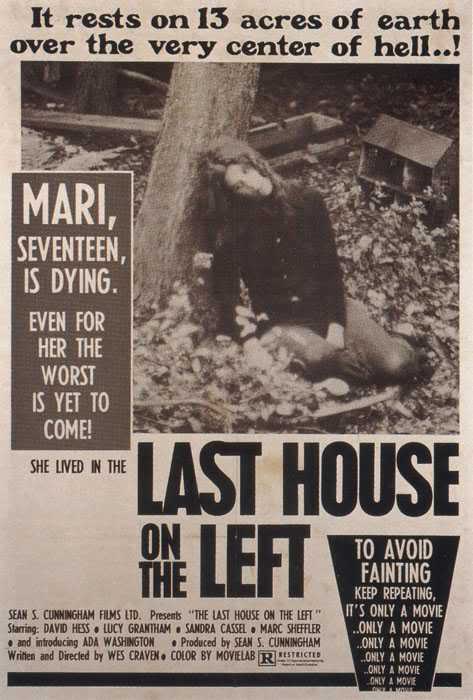
The Last House on the Left (1972)

Two girls meet four criminals meet protective parents

This was both ahead of its time in some regard and also a time capsule of the period with hip slangs and dress, not to mention with messages that were a hot debate back in the early '70s. This is an exploitation film that no doubt exploits, though it also softens the blow with randomly queued music and offbeat humor not to desensitize a viewer but to make one lower their guard and think they're safe for the time being. It's filmmaking at its most inappropriate and confrontational: not just with a surprise left hook, but sand thrown in the eyes and then a kick when down. This seminal film has been copied a few times since but there's still nothing quite like the actual experience even if everything doesn't come together quite so perfectly or in a neat little package. Rather than doing everything on purpose, the filmmakers stumbled into a cult item that's crude, blunt and with a final delivery that was also fresh due to how unrestrained it was.

Mari Collingwood and her friend Phyllis Stone are going to an edgy concert in a rough neighborhood in NYC. They're young and wild and life is an open field for them to explore all of its fun and thrilling areas. That is until they test their limits when attempting to buy marijuana at an unknown apartment from a boy their age. The trap is set by three recently escaped criminals of violent crimes and a girlfriend of their leader, Krug, who can hang just as tough. With little planning ahead than just getting away from the police hot on their trail, the sadistic criminals take their pleading captives out to a remote area to give into animal-like impulse that will leave their victims so humiliated they'll want to just end it all. It so happens to be near Mari's house in the woods with her parents and the Sheriff looking into her absence no less due to expecting her back for her next birthday party that she might never see again unless someone can intervene in time.

The tone of the film is truly odd and unorthodox due to how much it experiments: one moment being somewhat easy and whimsical fun, then the next truly sadistic without holding back. It's like it has two extremes of good and bad with little in the middle to grab onto. It's not a subtle film like its predecessor "The Virgin Spring" but one to instead wrack the senses. What better way to do so than to give some breathing room and then suddenly sock it to the stomach. Both the protagonists and antagonists have their pros and cons shown, whether it be mindless partying to giving in to the most darkest primal urges. Or living the quaint life to enacting elaborate revenge. The Sheriff's deputies are knuckleheads rather than heroes. Watching them make one bonehead move after the next is tedious and annoying but rightfully gets a viewer squirming from assumptions made by what they normally represent and should do in films.

"The Last House on the Left" blends sex, drugs and violence and how it relates to just giving in or having control to hold back. It shows women can be just as sadistic with one of the characters joining and egging on the situation. Another character is doped up and has the ability to do something about the predicament but chooses to turn in on himself and act comatose. This carries a message of the times--the promotion of peace and Vietnam protests--to show that violence even for the regular, everyday family member is necessary against heinous individuals who are beyond clean up or reform. It shows how innocence of body and mind can be robbed within the blink of an eye. Also how much a person can build up their family and belongings in life but then have them taken away in an instant. It brings one back to a primitive time when the police weren't so readily available and things have to be taken into a citizen's own hands. It shows how criminals would rather use, use, use than give back to society, while others give, give, give but then there's no one to help them when they need it.

There's no denying this movie has its faults: awkward camera angles, jumpy editing, wooden characters that primarily stick to their archetypes to make it easier to decode and digest. At times the film is much stronger with its messages than its hit and miss filmmaking techniques that are all over the place. Not to mention it's overly exaggerated and noticeably tweaked to go a certain way to get those results than always refining them. Even with its many setbacks "The Last House on the Left" manages to still entertain, disgust, frighten and bring about debate all within a single experience.

Rating: 8/10

Director: Wes Craven
Stars: Sandra Peabody, Lucy Grantham, David Hess
Link: IMDB